
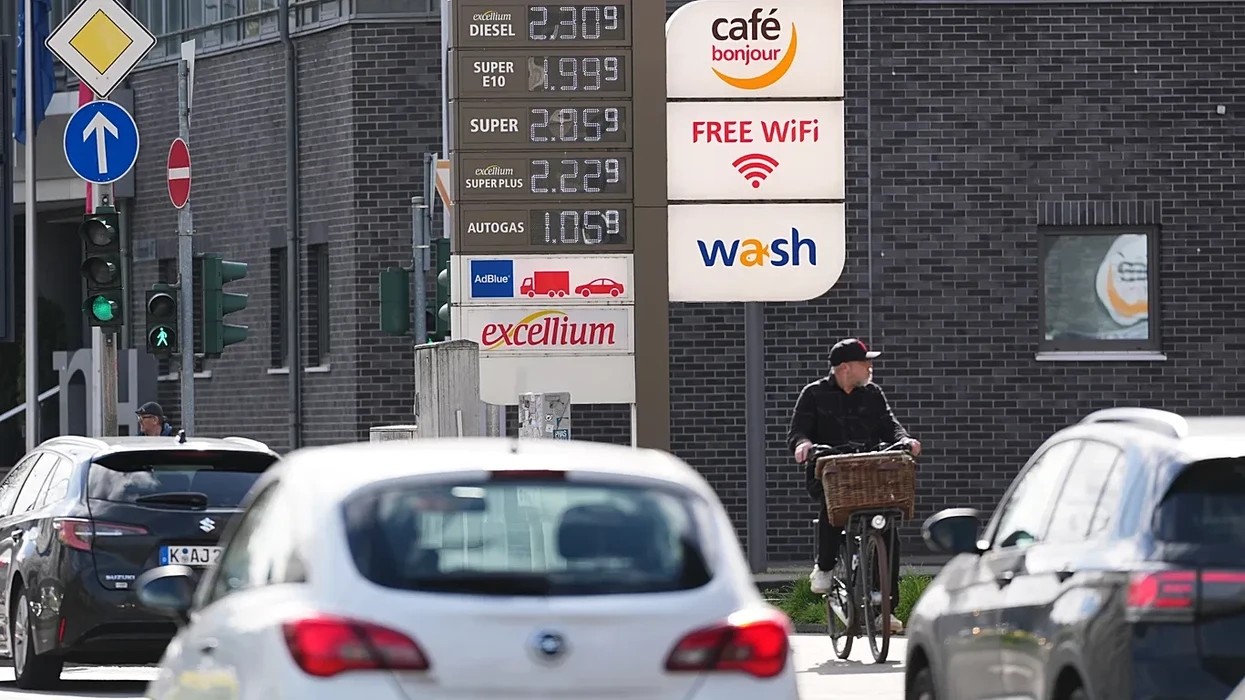
The escalating war in Iran has pushed up fuel prices across Europe, but Germany has felt it more harshly than most – petrol has risen by almost 5% in recent weeks, well above the EU average.
The gap with its neighbours is stark. France and Austria have seen increases of around 2%, Estonia 3.6%, Luxembourg 3.5%, while Slovakia and Hungary recorded increases of just 0.1%.
The European Commission, which publishes weekly data in its Oil Bulletin, has pointed to particularly large increases in Germany, the Netherlands, Denmark and Finland, the Telegraph reports.
Dutch drivers are currently paying the highest petrol prices in Europe, averaging 2.17 euros per litre last week.
Germany is very close at 2.08 euros, with Finland also in the upper range – known for expensive diesel as well as petrol.
Where do the different prices come from?
The biggest difference depends on national tax and duty structures.
Germany traditionally imposes higher energy taxes on fossil fuels both for environmental reasons and to finance infrastructure, while also charging for CO2 consumption, which affects overall costs.
The result is that Germans automatically pay more when prices rise.
In many other European countries, VAT, fuel and CO2 taxes are structurally lower.
However, the recent increase has struck the German government as disproportionate, and it has set up a coalition working group to examine what lessons can be learned from its EU partners.
Some countries have already acted. Croatia and Hungary have introduced price caps at petrol pumps.
In Croatia, prices initially rose by around four cents per litre, but the caps will limit further increases and will set prices at 1.50 euros per litre from 23 March.
In Hungary, petrol is capped at €1.51 and diesel at €1.59, although the measure only applies to residents, meaning tourists with foreign license plates will pay more.
In Austria, a different pricing rule applies: petrol stations are only allowed to raise their prices once a day, at midday. On the other hand, reductions are possible at any time.
This makes the situation clearer and more transparent, but whether this actually leads to lower petrol prices is debatable.
Politicians criticise oil companies
Economy Minister Katherina Reiche criticised fuel prices for rising rapidly due to high raw material costs and then falling only slowly, saying the government wants to “break this mechanism”.
It has proposed limiting petrol pumps to one price increase per day.
Driving is part of everyday life for most Germans when they travel to work, shop and go to school – so the pressure on the government to act has increased.
A task force convened in response met on Monday under the chairmanship of Sepp Müller, who then accused oil companies of “price gouging”.
The meeting produced harsh criticism of the industry’s practices.
A new study cited by Handelsblatt found that oil companies regularly use crises to raise prices rapidly, with Berlin economics professor Ferdinand Fichtner concluding that the recent price hikes cannot be explained by rising oil prices alone.
“There are really high profits being made here,” Fichtner told the newspaper.
The task force is now calling on the Cartel Office to expand its powers, including the ability to act against prices it considers excessive.
“We will not allow ourselves to be fooled here,” Müller said.
Oil industry rejects accusations
The task force meeting included the German heads of BP and Shell, along with the president of the Federal Cartel Office, Andreas Mundt, representatives of industry associations, consumer groups and the ADAC. The oil industry rejected the accusations.
Christian Küchen, managing director of the Fuel and Energy trade association, told Tagesschau that margins had not changed since the start of the Iran war and criticized the planned tightening of antitrust laws.
Several industry bodies also warned against political interference in petrol station prices following the Austrian model – among them the Bundesverband Freier Tankstellen, the Fuel and Energy Association and the Zentralverband des Tankstellengewerbes.
Their joint statement noted that more than half of the price of fuel is made up of taxes and duties.
“If you want to lower fuel prices permanently, you need to talk about government pricing components – not about interfering with competition,” it said, pointing the blame squarely at the federal government./BuzPost/